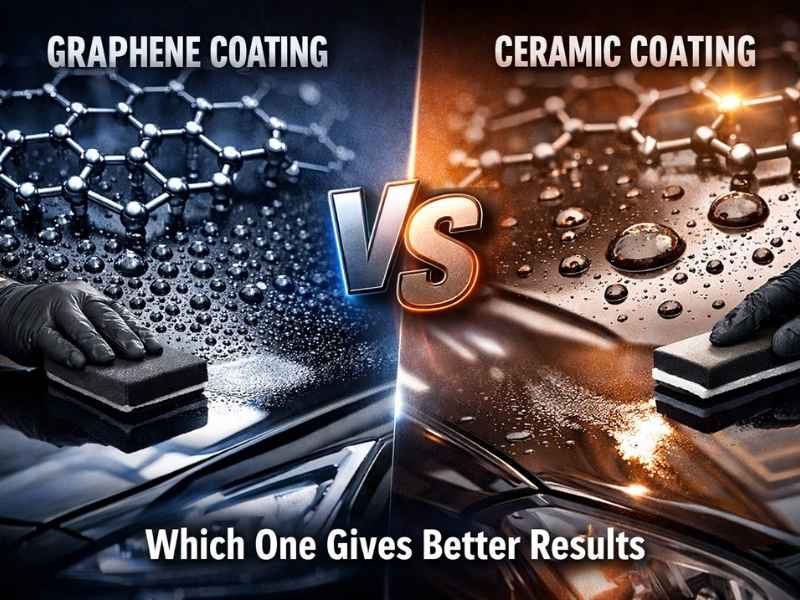
Car owners want the best protection for their vehicle’s paint. Two popular options currently are graphene coating and ceramic coating. They both promise long-lasting shine and protection. Each option carries unique strengths worth considering carefully.
The Difference Between Graphene Coating and Ceramic
Graphene coating represents the newest advancement in paint protection. It incorporates graphene, a single layer of carbon atoms in a hexagonal structure. This material is 200 times stronger than steel yet incredibly thin and flexible. Graphene coating combines the benefits of ceramic with additional unique properties. The carbon-based structure provides superior heat dissipation compared to traditional ceramic coatings.
The anti-static properties of the graphene coating help repel dust and dirt particles. Water sheets off the surface rather than beading up in spots. This behavior reduces water spots that can etch into the paint. Graphene coating typically lasts longer than ceramic with proper care and maintenance. Professional applications can protect for five years or more under normal conditions.
Ceramic coating has been around for many years in the detailing industry. It uses silicon dioxide (SiO2) as its main active ingredient. This compound forms a hydrophobic layer that effectively repels water and dirt. Ceramic coating sticks tightly to a car’s outer surface. It guards paint from harsh sunlight and fading over time. Road grime and pollutants can’t easily damage the protected finish. The result is a deep, mirror-like shine that turns heads everywhere.
Professional-grade ceramic coatings last between two and five years with proper maintenance. DIY spray options typically shield vehicles for one to three months. Ceramic coatings demand spotless surfaces before applying them. The curing stage also requires patience to prevent ugly streaks from forming. pH-balanced soap keeps these protective layers working well long-term.
Application and Maintenance
Applying a ceramic coating requires experience and attention to detail. Ceramic coating sets fast, so leveling must be done carefully. Missed bumps or streaks will stay if ignored. Hiring pros for top results is the best option for installation.
Graphene options allow more room for error during application. The formula allows slightly longer working time before curing occurs. This flexibility helps beginners achieve better results with less experience. Getting ceramic coatings ready takes some serious prep work. The surface needs deep cleaning and sometimes a good polish. These coatings won’t hide scratches or fix faded paint. They simply add a protective shield on top.
Taking care of both coating types works pretty much the same. Wash the car regularly with gentle, coating-friendly soap. Skip those rough automatic car washes with stiff brushes. Hand washing keeps the protective layer strong and lasting longer. Top-up products help maintain hydrophobic properties between full applications. Graphene detail sprays work specifically with graphene coatings for the best results.
Graphene coating and ceramic both deliver excellent paint protection results. The “better” choice depends on climate, budget, and performance expectations. Both technologies help vehicles look great with less maintenance. Car owners win either way with modern paint protection.
